

If you have textured or curly hair, you’ve probably been told you need a complicated routine.
Multiple products. Leave-ins. Masks. Gels. Oils. Methods.
And while some of those things can help, they’re often not the reason your hair feels dry, frizzy, or difficult to manage.
More often than not, the problem isn’t that you’re doing too little.
It’s that you’re doing too much — or using the wrong kind of products.
Because textured hair doesn’t need more steps.
It needs the right kind of care.
What Makes Textured Hair Different
Textured hair — whether it’s wavy, curly, or coily — behaves differently to straight hair for a simple reason:
Oil doesn’t travel down the hair strand as easily.
With straight hair, natural oils from the scalp can move down the shaft relatively easily, helping to keep the hair soft and protected.
With textured hair, that journey is much more difficult.
The bends and curves in the hair strand slow everything down.
Which means:
- hair tends to feel drier
- ends are more prone to breakage
- frizz is more common
- moisture needs to be maintained more carefully
This is why textured hair often benefits from a slightly different approach.
But “different” doesn’t have to mean complicated.
Where Most Routines Go Wrong
When hair feels dry or hard to manage, the instinct is usually to add more.
More conditioner.
More oil.
More styling products.
But over time, this can lead to a different problem entirely: buildup.
Hair becomes:
- heavy
- coated
- difficult to properly clean
- flat at the root but dry at the ends
At the same time, many shampoos are designed to remove everything — including the natural oils your hair actually needs.
So you end up in a cycle:
Strip → replenish → build up → strip again.
And the hair never quite settles.
What Actually Works
Caring for textured hair can be much simpler than it’s often made out to be.
It usually comes down to three things.
1. Gentle Cleansing
Instead of completely stripping the scalp, a gentler cleanse removes what’s unnecessary while leaving behind what your hair actually needs.
This helps:
- maintain balance
- reduce dryness
- avoid triggering excess oil production
When the scalp is balanced, the rest of the hair tends to follow.
2. Lightweight Nourishment
Textured hair does need moisture — but not all moisture is equal.
Heavy products can sit on the hair rather than absorbing into it, especially over time.
Lightweight, well-formulated ingredients tend to:
- soften the hair
- improve manageability
- reduce frizz
- without creating buildup
3. Consistency Over Complexity
The best routines are the ones you can actually stick to.
Not the ones that require ten steps or constant adjustments.
When you find something that works, keeping it simple and consistent is usually what gives the best results over time.
A Simpler Approach to Softer Hair
When I was formulating the Cherry Blossom range, the focus was exactly this:
How do you support softer, more manageable hair — especially for dry or textured hair — without adding unnecessary weight or complexity?
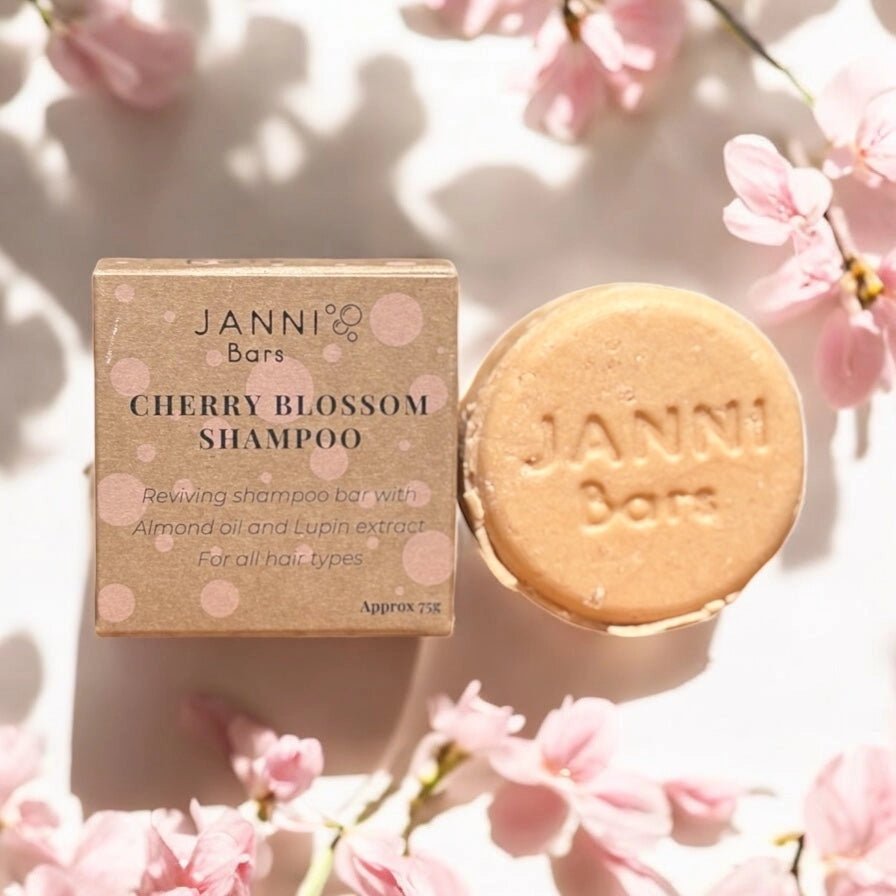
A couple of ingredients became key:
Sweet almond oil
Known for its lightweight, nourishing properties, it helps soften the hair without leaving it heavy or coated.
Lupin extract
A plant-based ingredient that helps support the feel and strength of the hair, especially where it’s more prone to dryness.
Together, the aim wasn’t to create something complicated.
It was to create something that simply works — especially for hair that needs a bit more care, but not more steps.
Bringing It Back to Basics
There’s a line I come back to quite often:
We started in a stable.
And that’s still how I think about product formulation.
Things needed to work.
They needed to be simple.
And they needed to hold up in real life.
That same thinking applies here.
Textured hair doesn’t need an overwhelming routine.
It needs:
- gentle care
- the right ingredients
- and a bit of consistency
The Takeaway
If your hair feels dry, frizzy, or difficult to manage, it’s easy to assume you need more.
But often, the opposite is true.
Fewer products.
Better ingredients.
Simpler routines.
Because textured hair doesn’t need to be controlled.
It just needs to be supported.
Janni ✨